


Only 2.2% of U.S. households paid for AI services in April 2026, despite billions invested in artificial intelligence. Discover why Americans remain reluctant to subscribe, how AI is already shaping daily life, and what this means for workers and small businesses.
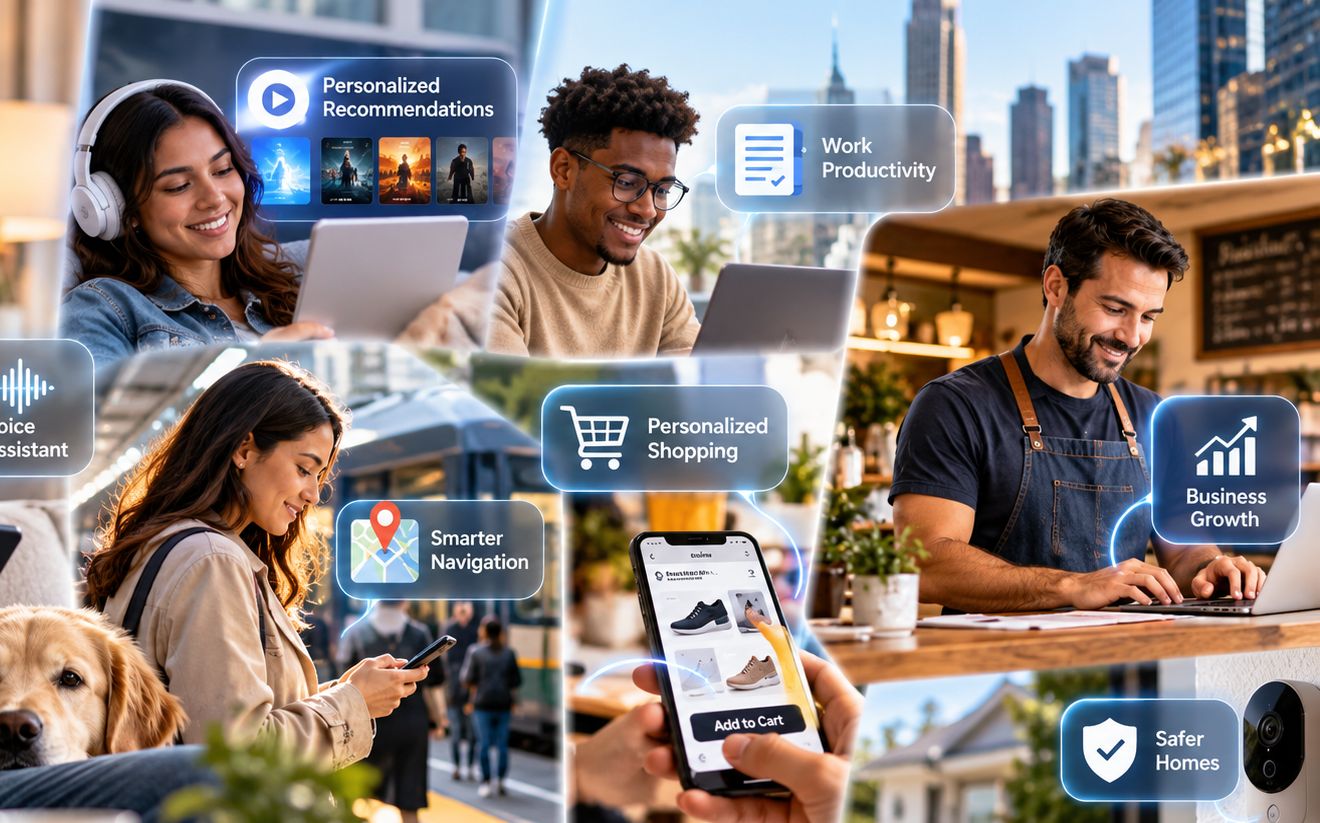
Free access is a major reason Americans are reluctant to pay for AI subscriptions, as many consumers do not yet see enough added value to justify the monthly cost.
Artificial intelligence may be the biggest technology story of the decade, but there’s a surprising disconnect between Wall Street’s enthusiasm and Main Street America’s willingness to pay for it.
According to a September 2026 report from venture capital firm Andreessen Horowitz (a16z), just 2.2% of U.S. households were paying for an AI service as of April 2026. That’s a remarkably small percentage considering the billions of dollars technology companies are investing in AI infrastructure, software, and data centers. But here’s the interesting part: Americans may not be paying directly for AI, yet they’re increasingly using it – sometimes without even realizing it.
Why Most Americans Aren’t Paying for AI
For the average household already juggling streaming subscriptions, groceries, insurance, and other monthly expenses, another $20 AI subscription may seem unnecessary. Many consumers simply don’t see enough value in paying for something they can already access for free. After all, why pay to write an email, summarize an article, or plan a vacation when free tools can handle many of those tasks? That doesn’t necessarily mean Americans are rejecting AI. They may simply be waiting for a stronger reason to open their wallets.
A separate October 2026 a16z consumer AI report found that 4.5% of eligible U.S. consumers in a spending-data panel had a paid personal subscription to ChatGPT, Gemini, or Claude in August, up from 2.1% a year earlier. The figures use different samples and definitions, but both point toward a growing market that remains relatively small.
AI Is Already Part of Everyday American Life
Whether consumers pay for it or not, artificial intelligence is increasingly embedded in products and services they already use. Consider a few familiar examples:
- Smartphones: AI helps improve photos, filter spam calls, and provide voice assistance.
- Shopping: Online retailers use AI-powered systems to recommend products and personalize experiences.
- Banking: Financial institutions use machine learning to identify suspicious transactions.
- Entertainment: Streaming platforms use recommendation algorithms to suggest movies, music, and shows.
- Work: AI assistants help professionals organize information, draft documents, and complete repetitive tasks.
Not all these applications use the same generative AI technology behind ChatGPT. Still, they demonstrate how AI can become useful without requiring consumers to purchase a separate subscription.
Who Is Actually Spending Money on AI?
While most consumers remain cautious, businesses, developers, and professionals who depend on AI for productivity are showing much stronger willingness to pay. The October a16z report found that the top 1% of paying users accounted for 19.5% of observed consumer AI spending — more than the bottom half of paying users combined.
Why such a difference? For someone occasionally asking AI for a dinner recipe, a paid subscription may offer little additional value. But for a graphic designer, consultant, software developer, or marketing professional, the calculation changes dramatically. If a $20 monthly tool saves several hours of work, the subscription can become an investment rather than an expense.
What This Means for Small Businesses in America

Professionals and businesses are more willing to pay for AI tools when they improve productivity, save time, and deliver measurable benefits
For America’s small businesses, the real opportunity isn’t necessarily adopting every new AI product. It’s identifying where technology can deliver practical results. A local restaurant might use AI to help draft social media posts. A real estate professional could organize client communications. A small retailer might improve product descriptions or analyze customer questions.
AI can also support digital marketing, search engine optimization (SEO), customer service, and administrative productivity. However, businesses should verify AI-generated information, protect customer data, and measure whether a tool actually saves time or improves results. The smartest approach is often to start with free tools, test specific tasks, and upgrade only when the benefits justify the cost.
The Bigger Picture: AI Doesn’t Need Everyone to Subscribe
The future of artificial intelligence may not depend on convincing every American household to pay $20 a month. Instead, AI could increasingly become part of services people already purchase, while businesses and advanced users continue paying for more powerful capabilities.
This creates an important distinction: using AI and paying directly for AI are two very different things.
For consumers, the challenge is understanding which tools genuinely make everyday life easier. For professionals and small businesses, it’s learning how to turn new technology into measurable value.
The next phase of AI won’t be defined only by how much technology companies spend – but by how useful that technology becomes to ordinary people. And that’s a development worth watching.
At Kisuccess Marketing, we follow emerging technologies, AI developments, and digital marketing trends to help professionals and small businesses understand what’s changing – and how those changes may create practical opportunities for growth. Count on us to help you!
FAQ — Optimized for AI Search and Voice Search
1. Why aren’t most Americans paying for AI?
Many Americans already have access to free AI tools and don’t see enough additional value in paying a monthly subscription. Household budgets and uncertainty about practical benefits also influence purchasing decisions.
2. How many Americans actually pay for AI?
An a16z report found that 2.2% of U.S. households paid for AI services in April 2026. A separate consumer spending panel measured paid personal subscriptions to three leading AI assistants at 4.5% in August 2026.
3. Is artificial intelligence already part of everyday life?
Yes. AI technologies support smartphone features, fraud detection, online shopping recommendations, streaming platforms, and workplace productivity tools.
4. Is AI worth $20 a month for the average person?
It depends on how frequently the person uses it and whether paid features provide meaningful benefits. Occasional users may find free versions sufficient.
5. How can small businesses benefit from AI without spending much money?
Small businesses can begin with free AI tools to assist with content creation, customer communications, research, and administrative tasks. Human review remains essential.
6. Will AI eventually become a necessity for American workers?
AI literacy is likely to become increasingly useful across many professions, although the need for particular tools will depend on the occupation and employer.